.avif)


Data reports are no longer just an annual lift for B2B brands. Half of marketing teams conduct market research to fuel content every month, according to Datalily’s 2026 State of Data-Driven Content Marketing Report.
This frequency is a testament to the ROI of original research, and the low barrier to entry for running surveys. There are countless options today for teams of any size to collect survey responses, whether you’re trying to reach consumers who frequently travel for work or IT executives.
But not all vendors are created equal. Selecting a reliable B2B research panel is one of the earliest steps you can take to ensure the integrity of your data report efforts.
At Datalily, we partner with a range of panels to meet each of our clients’ goals. Let’s walk through how to pick the best partner and what you should know about 8 of the top B2B panels around today.
How to choose the right B2B research panel
Most B2B research panels offer a similar suite of services: survey creation tools, audience sourcing, analysis capabilities. These are the questions to ask when evaluating vendors to find the best match
- Which audiences do they specialize in? Certain vendors focus on general population consumer panels, while others prioritize B2B respondents (e.g., marketers, HR practitioners, developers).
- How granular is their audience targeting? Just because a vendor can reach consumers doesn’t mean they can reach consumers with masters degrees who are actively job-searching. Similarly, surveying IT managers won’t suffice if you want to understand CIOs’ priorities. Understand how specific each panel can get in terms of demographics, firmographics, and more.
- What types of research do they support? Which vendor you choose also depends on whether you’re looking to conduct quantitative or qualitative research. Creating survey panels and vetting focus group participants are very different strengths. Vendors are also increasingly offering synthetic data services (i.e., AI-generated responses built to mimic the characteristics of your target audience). We recommend reserving this for internal projects like product research, rather than reports you plan to publish externally.
- How do they ensure data quality? Incomplete, fraudulent, and bot-generated responses are common quality risks associated with online surveys. Understand which protocols your B2B research panel takes to mitigate these issues (e.g., CAPTCHAs, attention checks, biometrics like typing speed, or unique survey links for each respondent).
- What other tools do they integrate with? Like we mentioned, many vendors offer their own survey hosting and analysis tools. But if you want to handle these steps in tools that already exist in your tech stack (e.g., SurveyMonkey or Tableau), make sure the panel provider you choose supports those integrations.
- How do they verify their participants’ identities and qualifications? The integrity of your survey data depends on finding respondents who fit your exact criteria. Panels that self-verify respondents rely on each individual confirming who they are, and sometimes answering questions about themselves. With manual verification, the vendor confirms each respondent’s identity by cross-referencing details against things like business email addresses, government databases, and LinkedIn profiles.
8 B2B research panels to consider for your next project
Now that you know how to vet different B2B research panels, let’s take a closer look at some of the top vendors around.
1. Centiment
Centiment’s panel services help brands source consumer and B2B respondents across 100 countries, which explains why 21% of B2B marketers work with them, according to our 2026 State of Data-Driven Content Marketing Report.
Centiment hooks up to other survey platforms like SurveyMonkey, Qualtrics, and Typeform, and has a Zapier integration that lets you pass responses to analysis tools like Google Sheets and Airtable.
Since Centiment relies on respondent self-verification, their panels are a better fit when you need to reach general audiences (e.g., “marketers across industries and company sizes”) rather than niche groups.
Bottom line: Centiment is a budget-friendly choice for broad consumer and industry research.
2. Pollfish
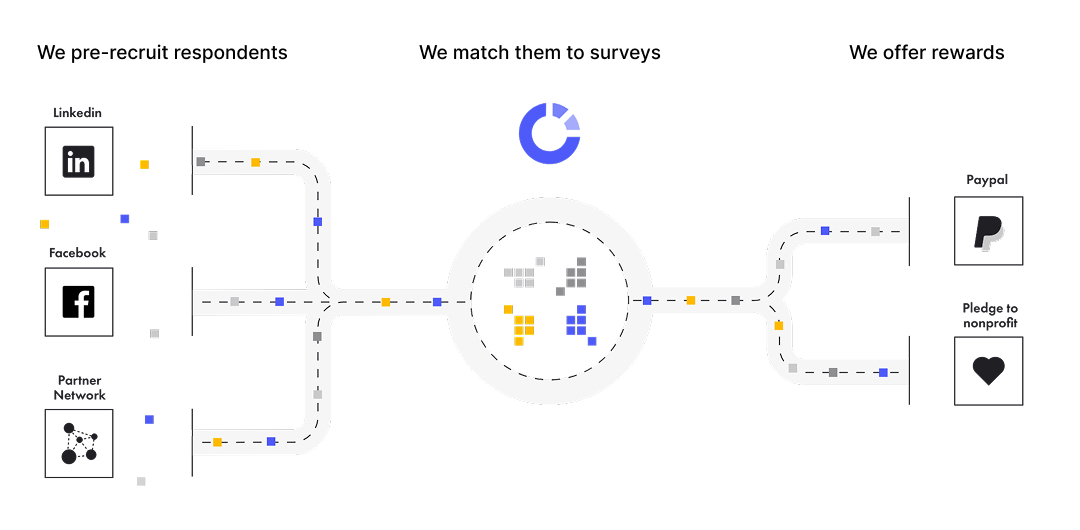
Pollfish is a global, first-party survey panel with access to millions of consumers. They’re a popular choice among B2B marketers, 46% of whom have used them, per our 2026 State of Data-Driven Content Marketing Report.
Pollfish offers 7,000 self-verified attributes to refine your audience targeting, going beyond the usual demographics and psychographics (e.g., specific brand affinities, app usage habits, purchase histories). They use proprietary AI and machine learning to remove low-quality responses, and can turn around data collection in a matter of hours for certain audiences.
They don’t offer professional audience targeting, so save Pollfish for your consumer efforts.
Bottom line: Pollfish is a reasonably priced option for quick consumer surveys.
3. Panoplai
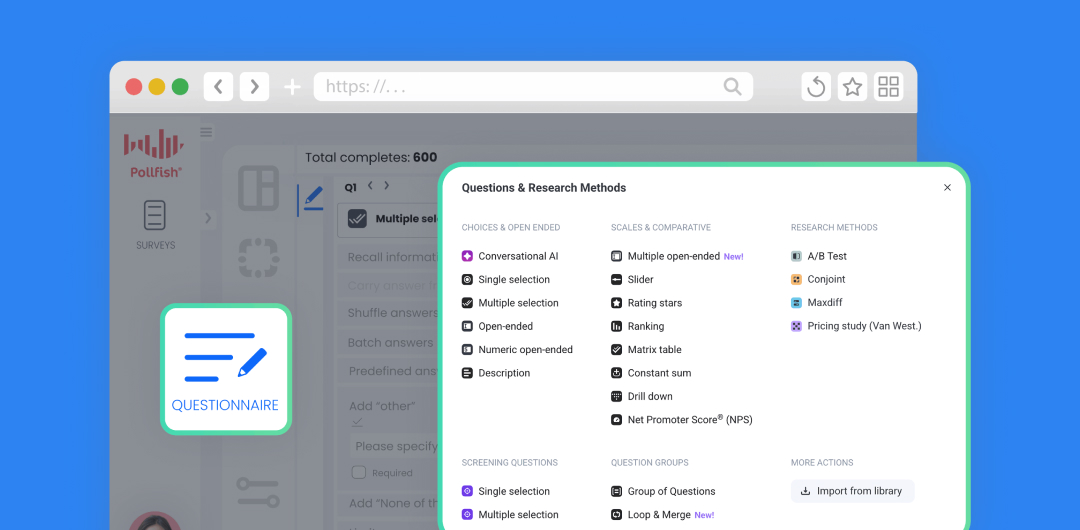
Panoplai (formerly Glimpse) is a B2B research panel with access to over 335 million people across over 100 countries, to support both quantitative and qualitative research.
In addition to helping marketers target self-verified respondents, Panoplai lets you upload external survey results, CRM files, and third-party datasets into a unified hub. This could be a plus if you want to supplement survey insights with your own customer or product data.
Panoplai falls in mid-range for respondent pricing, and offers detailed targeting options if you’re trying to reach decision-makers or professionals in large organizations. They do require an annual license on top of respondent costs, which can be expensive depending on how many surveys you run.
Bottom line: Panoplai is best for enterprise-level market research programs that run dozens of surveys per year.

4. SurveyMonkey
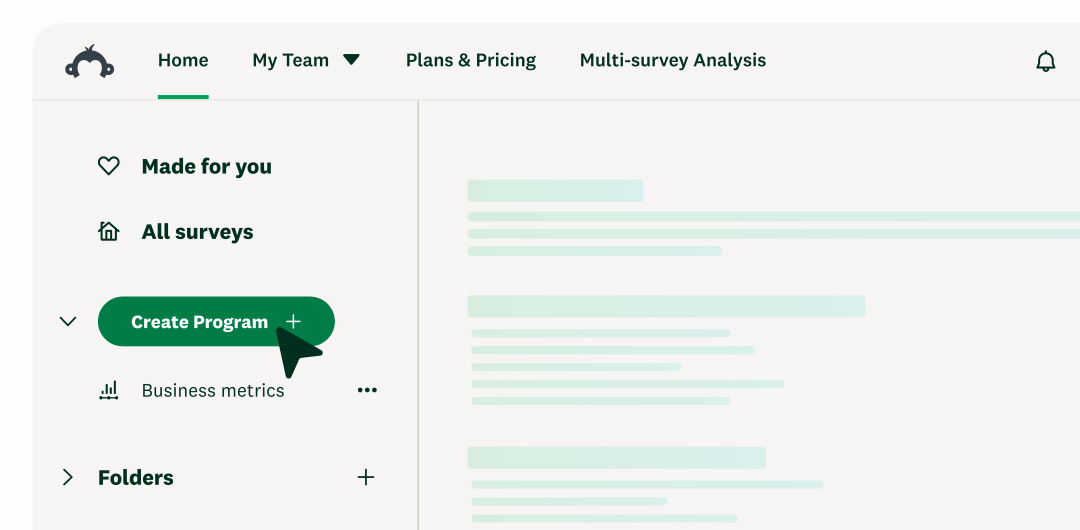
It’s no surprise why 65% of B2B marketers use SurveyMonkey: They’ve been in the business of data collection for over 25 years.
The SurveyMonkey Audience panel includes more than 335 million self-verified people in more than 130 countries, with over 200 targeting options. They offer robust AI-powered bot and fraud protection, plus the ability to see respondent metadata in your account to catch speeding, or remove responses from your analysis.
Their panel responses automatically flow into SurveyMonkey’s (familiar, user-friendly) analysis platform, but the data can also be exported to spreadsheets, Tableau, or Microsoft Power BI.
SurveyMonkey’s self-service audience targeting calculator makes it easy to pull research quotes and feasibility, but pricing can be expensive for more niche targeting.
Bottom line: SurveyMonkey is a mid-price choice for consumer and broad professional surveys, particularly for teams that need survey hosting and panel access.
5. Alchemer
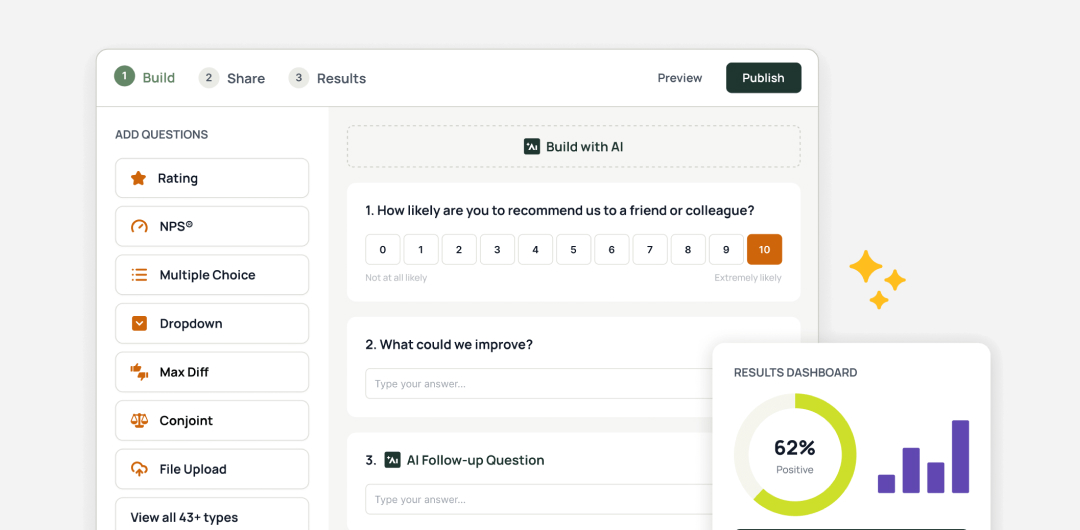
Alchemer is an AI-powered research platform used by 31% of B2B marketers, according to our 2026 State of Data-Driven Content Marketing Report.
Alchemer has access to over 100 million respondents, including consumers and B2B professionals, in over 100 countries worldwide. But because they rely on manual verification, they can recruit high-quality custom audiences. Alchemer’s Data Quarantine Tool automatically detects unusable responses, plus they promise to replace any unusable data at no additional cost.
Alchemer does offer self-service panel options for smaller projects (around 50 respondents or fewer), but anything larger requires support from a rep. Given their granular targeting capabilities, expect higher costs and longer data collection timelines.
Bottom line: Alchemer is best for teams with larger budgets that need to reach hyper-specific audiences.
6. CleverX
CleverX is a marketplace that helps teams find and recruit relevant research participants to online surveys, moderated interviews and product tests. 21% of B2B marketers use CleverX to tap into 8 million manually verified participants, including consumers and professionals from over 140 industries and nearly 40 job functions.
AI is baked into CleverX’s platform, from real-time fraud monitoring that catches suspicious patterns and low-quality responses, to their LLM-style survey builder and analysis tools. In addition to offering over 300 demographic filters and reaching professionals across seniority levels, CleverX lets you recontact respondents to conduct in-depth interviews for qualitative insights.
Clever X offers a starter plan, but features like a team workspace and PDF/PPT exporting require a Pro plan.
Bottom line: CleverX is a white-glove B2B panel option for teams with higher budgets who want to target niche (or senior-level) respondents.
7. NewtonX
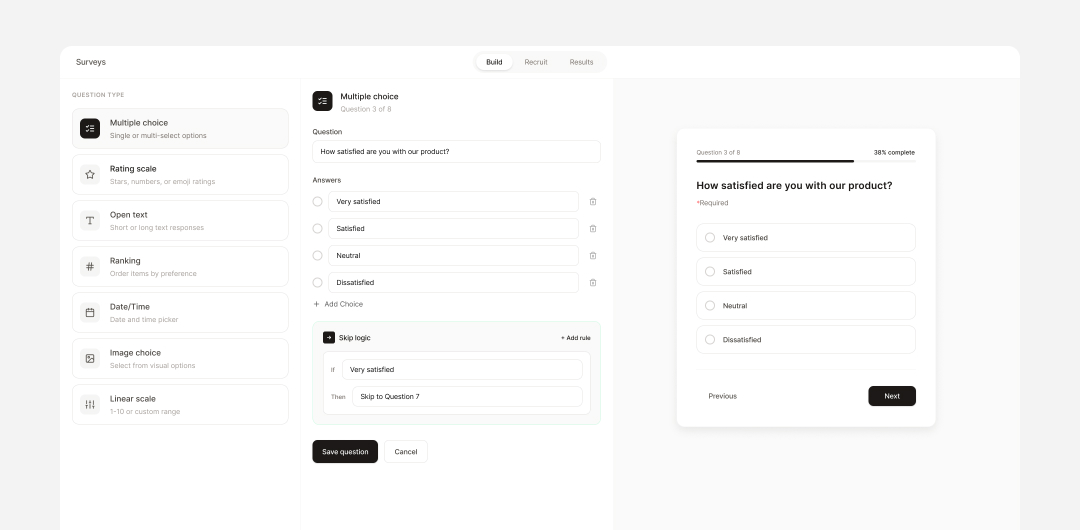
NewtonX is a full-service B2B research firm used by 21% of marketers, per our 2026 State of Data-Driven Content Marketing Report. Their panel is powered by NewtonX Graph, a proprietary search tool that sifts through over 1 billion professionals to manually verify and recruit precise audiences from professional networks and other trusted sources.
NewtonX can reach more than 140 industries, helping target profiles as granular as crypto hedge fund specialists or Reddit users that seek out specific content. Their AI-powered platform continuously learns from its searches, so it gets better at finding the right respondents over time.
Given their targeting and verification capabilities, NewtonX is a pricier option with potentially longer fielding timelines (4-5 weeks) depending on who you want to survey.
Bottom line: NewtonX is best suited for B2B teams who need to reach specialized profiles and have more flexibility with their project timelines.
8. Qualtrics
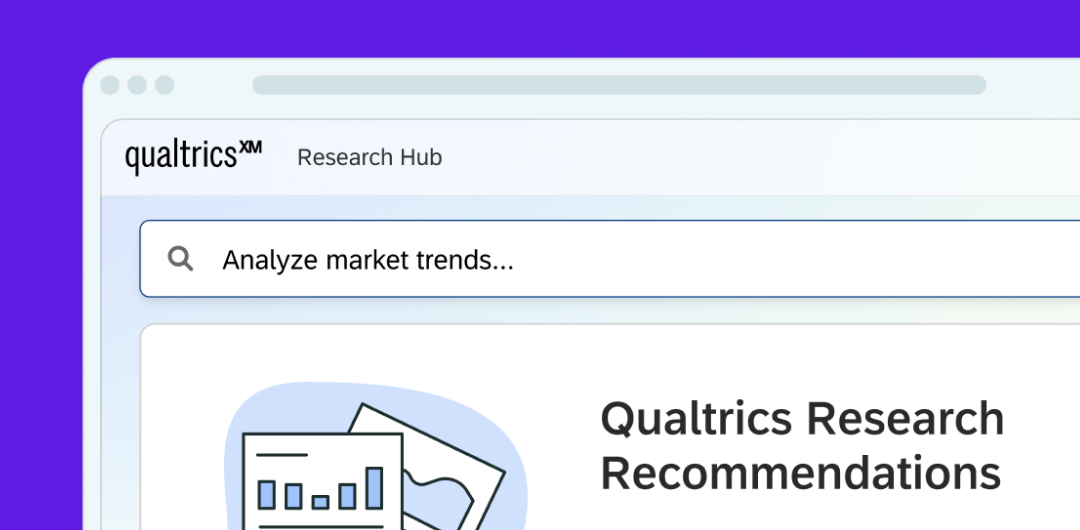
Qualtrics is a heavy-hitter in the research world, used by 64% of B2B marketers today, according to our 2026 State of Data-Driven Content Marketing Report. Their full service platform supports the entire research lifecycle, from data collection to analysis, across quantitative, qualitative, and hybrid studies (including focus groups).
With Qualtrics, you can build panels using your own customers or recruit self-verified respondents through their network of third-party panel partners. They offer out-of-the-box integrations with Google, Tableau, Zapier and more so that you can handle analysis in your preferred tool.
Qualtrics plans are built around their various product suites, so you’re paying for access to their survey builder, analysis features, and account reps—even if you only need panel support.
Bottom line: Qualtrics is a comprehensive platform better suited for large teams looking to unify their research efforts in one place.
Launch your next report with the right B2B research panel
More than half of B2B marketers outsource data collection for their research campaigns, according to our 2026 State of Data-Driven Content Marketing Report. Who you partner with has a direct impact on the quality of your final report.
Planning to kick off your next research project? Reach out to see how Datalily can help you find the best panel and manage the entire process from start to finish.